

Secondary Glazing in Suffolk: Costs, Noise Reduction, Planning Permission & Benefits
A clearer understanding of your windows, your options and what will make your home warmer and quieter.

Introduction
If your home feels cold, suffers from draughts or lets in too much outside noise, secondary glazing can improve comfort without replacing your existing windows.
It adds a separate glazed window on the inside, creating an additional barrier against heat loss and sound. This guide explains the benefits, costs, planning considerations and alternatives, helping you decide what suits your property.
Quick answer: is secondary glazing worth it?
Often, yes, particularly when your existing windows are worth retaining or you need better sound insulation in a specific room. It can be especially useful for original windows in period and listed homes, but modern properties can benefit too.
Secondary glazing at a glance
✓ Can significantly reduce outside noise when correctly specified and installed
✓ Can improve thermal performance and reduce draughts
✓ Allows original windows to be retained
✓ Often suitable for period and listed properties
✓ Usually does not require planning permission in unlisted homes
✓ Can be more economical than replacing traditional windows
The right choice depends on the condition of the windows and what you want to improve.
Repairs may resolve an isolated fault, while replacement double or triple glazing can provide a broader upgrade. The comparisons below explain where each option fits.
For advice about the systems we install,
see oursecondary glazing service in Suffolk.
What is secondary glazing?
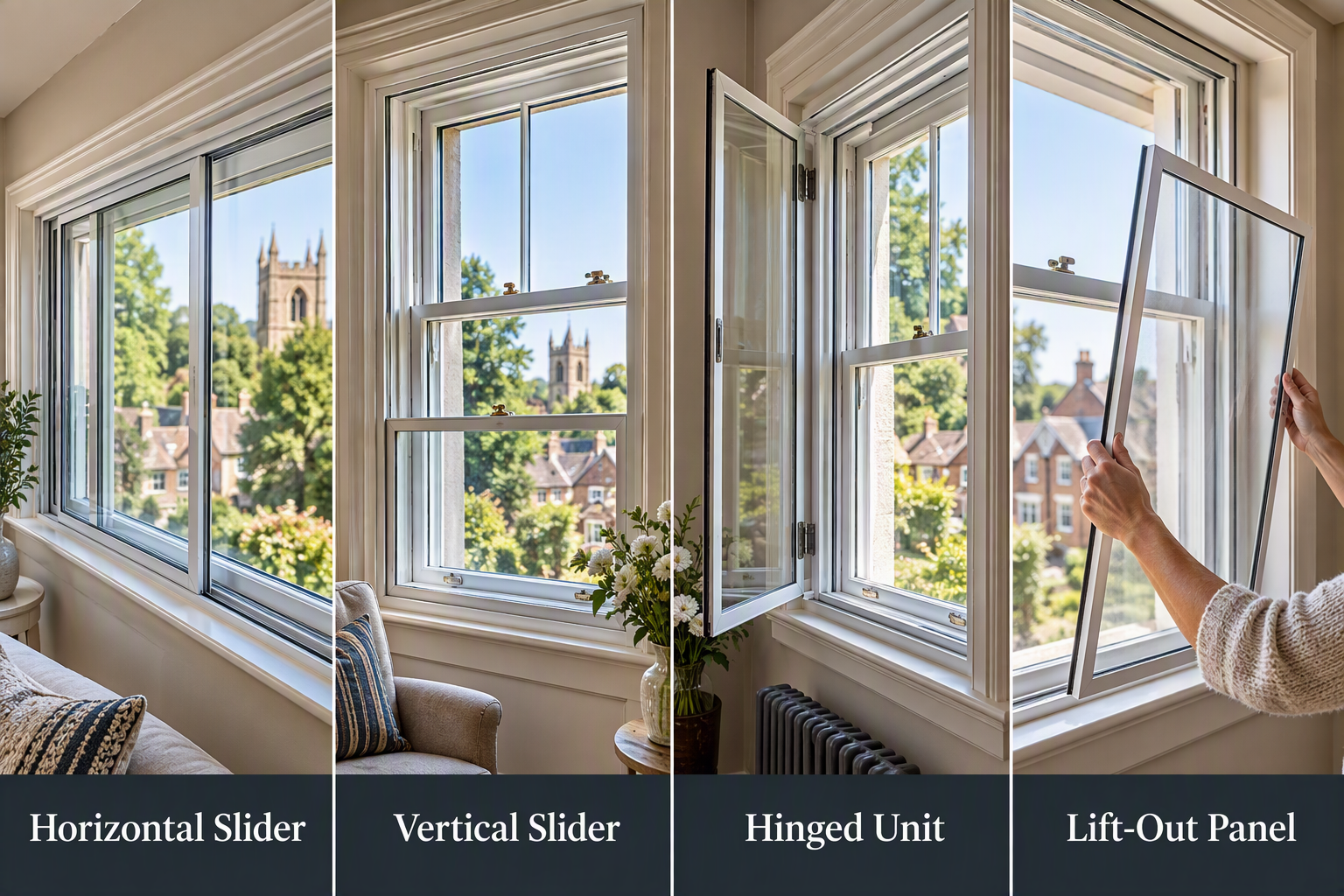
Secondary glazing is an independent frame fitted behind an existing window, with an air space between them. Panels can slide, hinge open or lift out to provide access.
It differs from sealed double glazing, where two panes form a single sealed unit. Permanent glass systems also differ from temporary window film and lightweight removable plastic panels.
Which buildings can benefit?
Period and listed homes: original sash, casement, leaded and metal windows can be retained while an internal layer improves their performance. This may suit a timber-framed cottage in Lavenham or Kersey, or a Georgian townhouse in Bury St Edmunds.
Conservation-area properties: secondary glazing can preserve the external window design while improving comfort inside. The planning section explains how designation affects the available options.
Modern homes, flats and commercial buildings: additional acoustic insulation may be useful in road-facing bedrooms, home offices, guest accommodation and workplaces, even behind existing double glazing. Tenancies, leases and commercial use may introduce additional permission, access and safety requirements.
Benefits for warmth and noise reduction
How it reduces cold and draughts
A draught is air leaking through gaps around a window or its frame. A well-fitted secondary window provides an internal seal that reduces this unwanted airflow. Planned ventilation still supplies the fresh air a room needs; it should be considered separately from draughts.
Historic England explains this distinction in its guidance on draught-proofing older buildings.
The additional pane and enclosed air space also slow heat transfer. Low-emissivity glass, usually called low-E glass, reduces radiant heat transfer through the glazing. The cavity is normally air-filled, rather than the sealed, gas-filled construction used in many double-glazed units.
Historic England reports that secondary glazing with suitable low-emissivity (Low-E) glass can reduce heat loss through a window by over 60%. This is a window-performance figure, not a prediction of heating-bill savings, and the result depends on the existing window and the proposed installation.
Improving the room-facing surface temperature also helps make the area beside a window more comfortable. Cold glass cools nearby air, which falls and can feel like a draught even without air leakage; your body also loses radiant heat towards cold surfaces.
Understanding U-values
A U-value measures heat transfer through a building element. For otherwise comparable products, a lower value means better insulation.
Ask whether a quoted figure describes the glass alone, usually labelled Ug, or the complete window, Uw. For secondary glazing, the useful comparison is the performance of the existing window and secondary glazing together.
For example, Granada publishes a calculated combined whole-window U-value of 1.50 W/m²K for its heavy-duty hinged secondary-glazing system with 6mm K glass, a specified hardwood primary window and a 50mm air gap. Other configurations have different results, so this is an example of a defined installation rather than a rating for all secondary glazing.
See Granada’s hinged-system performance data for the calculation basis and distinctions between independently calculated and internally indicative figures.
Window performance and heating bills are different measures. A percentage reduction in window heat loss does not produce the same percentage saving on bills. Energy use depends on the whole building, heating system, ventilation, heating habits and weather.
How it reduces outside noise
Sound travels as pressure variations through the air. When those variations reach a window, they can make the glass vibrate and transmit sound into the room. Sound also passes through gaps around openings.
A successful acoustic design addresses both the glass and the routes around it.
An additional sealed barrier
Small openings can undermine an otherwise effective window. Well-designed seals and careful fitting help close the direct air paths through which sound can travel.
This is why an acoustic glass specification should be considered alongside the frame, opening mechanism and installation details.
Separation between the two windows
The original and secondary windows form two separate barriers, with air between them. This arrangement can provide effective sound insulation, particularly where a useful cavity depth is available.
The space matters, but there is no single gap that guarantees a particular result. For its hinged systems, Granada recommends a 150–200mm glass-to-glass cavity with acoustic glass where maximum acoustic performance is the priority. A shallower installation may still be useful; its specification needs to reflect the available reveal.
A larger acoustic cavity should not be assumed to produce proportionally better thermal insulation. Heat and sound behave differently.
Glass thickness and acoustic laminate
Glass thickness and composition influence how a window responds to sound. An appropriate combination of panes can improve acoustic performance, while acoustic laminated glass uses a specialist interlayer to help damp vibration.
The best specification depends on the noise you want to reduce and the complete window arrangement. Simply choosing thicker glass does not guarantee the best result.
Toughened glass and acoustic laminated glass serve different purposes. Toughening alone does not make a pane specialist acoustic glazing. Where safety glazing is required, the specification needs to address that requirement alongside noise control.
Reading acoustic claims correctly
An Rw rating is a laboratory-based measure of sound insulation. Higher values generally indicate better insulation under the stated test conditions.
It is not a guaranteed reduction in the noise level inside your home. A system rated at 50 dB Rw should not be described as making your bedroom “50 dB quieter”.
For traffic noise, the performance at different sound frequencies also matters. Technical information may include a Ctr adjustment, which helps assess performance against noise such as road traffic. Comparing headline Rw figures alone can miss these differences.
When considering acoustic claims, ask what arrangement the evidence covers:
- The original window.
- The secondary-glazing system.
- The glass types and thicknesses.
- The gap between the windows.
- Whether the figures come from testing or calculation.
The practical aim is to reduce disturbance in the room. Results also depend on sound entering through vents, doors, walls or the roof.
Tell us what you can hear, which rooms are affected and when the noise is most intrusive. Severe or unusual noise problems may benefit from a specialist acoustic assessment.
Secondary glazing vs repairs, double glazing and triple glazing
These options address different needs. More than one may be appropriate within the same property:
Start with the problem you can observe
These are starting points for a survey, rather than diagnoses:
| What you notice | What to investigate first |
|---|---|
| Air movement around a closed opening | Fit, seals, hardware and frame-to-wall junctions |
| A cold sensation beside apparently well-sealed glass | Surface temperature and the window’s thermal performance |
| Mist trapped between the panes of an existing sealed unit | Whether the sealed unit has failed and can be replaced |
| Traffic remains intrusive with the window shut | Air gaps, glazing specification, available cavity and other sound paths |
| Original windows are valued but the room is uncomfortable | Their condition and the scope for an internal secondary system |
Tell the surveyor where and when the problem occurs. That helps distinguish a repairable fault from a reason to upgrade the window’s performance.
Choosing between them
If a window catches, rattles or has a failed sealed unit, identify the fault first. A component or glazing-unit repair may resolve it where the frame is sound. Our window questions and answers explain how to start a repair-or-replacement enquiry. Historic conservation repairs should be assessed for the specialist skills required.
For a thermal comparison, Historic England recognises that well-designed secondary glazing, particularly with low-E glass, can achieve improvements comparable with double glazing.
Replacement double glazing renews the whole assembly, including frames, weather seals and hardware, and can be specified for acoustic performance. Our replacement windows page explains the service and styles.
Triple glazing adds a third pane and second sealed cavity, potentially reducing heat transfer further. Compare its actual whole-window performance and additional cost. Three panes do not automatically provide better sound insulation than every double-glazed or secondary arrangement.
The Energy Saving Trust guide to efficient windows and doors provides further background.
Costs and choosing the right system
How does secondary glazing compare on cost?
When comparing window improvements, consider both the cost of the product and the work needed to fit it. Repairs, secondary glazing and complete window replacement involve different materials, installation work and levels of disruption.
The comparison below is a general guide rather than a fixed price ranking. Window size, frame material, glass specification, condition and access can all affect the final quotation.
| Options | Product and material costs | Fitting time and work involved |
|---|---|---|
| Repairs and draught-proofing | Often the lowest starting cost where only seals, hinges, handles or other small components need attention. Extensive timber repairs or replacement glass can cost considerably more. | Minor repairs usually involve the least time on site. Restoring damaged timber or overhauling sash windows can be more labour-intensive and may need several visits. |
| Secondary glazing | Often less expensive than replacing the complete window, particularly when retaining bespoke or traditional timber windows. Larger panels, specialist glass and opening mechanisms increase the cost. | Usually involves less disturbance than full replacement because the original window stays in place. Fitting time depends on the system, the condition of the opening and any preparation needed. |
| Replacement double glazing | Requires a new window and frame. Standard uPVC windows generally cost less than bespoke timber designs, so costs vary considerably. | Includes removing the old window, fitting and sealing the replacement, and any necessary making good around the opening. This generally involves more work than adding secondary glazing to a suitable existing window. |
| Replacement triple glazing | Usually costs more than an equivalent double-glazed window, although the difference varies between products and specifications. | The installation process is similar to double glazing. Heavier units may need additional handling, but do not automatically mean a much longer installation. |
These options do not always follow a fixed order of price. Extensive restoration can cost more than straightforward replacement, while bespoke acoustic secondary glazing may cost more than some standard double-glazed windows.
The best value depends on the condition of your windows and what you want to achieve. Repairs may resolve faulty seals or fittings; secondary glazing can improve suitable windows you want to retain; replacement may be more appropriate where frames are beyond economical repair.
What should the quotation include?
A clear quotation should identify:
- The number and size of windows.
- The system, opening style and frame finish.
- The glass specification.
- Installation, preparation and any repairs.
- Making good and disposal of waste.
- Any access equipment required.
- The total payable, including any applicable VAT.
- The warranty and what it covers.
Ask how long installation is expected to take and whether further visits or decorating will be needed. Distinguish manufacturing and delivery lead times from the time the installers will spend in your home.
Can you improve one room at a time?
Yes. Starting with a noisy bedroom or a cold sitting room can make the project more manageable.
Ask for a quotation for the priority room, with additional windows priced separately. This allows you to plan further work while considering ventilation and how the systems will work together throughout the property.
Have one room in mind? Send us a few photographs and tell us what you would like to improve, and we can discuss the options.
What about energy savings and payback?
There is no single payback period that applies to every home. It depends on the installed cost, the existing windows, how the building is heated and how much energy use changes after the work.
Better window insulation does not translate into the same percentage reduction in whole-house heating bills. Consider likely energy savings alongside comfort, noise reduction and retaining valued original windows.
Choosing a system you can live with
The opening style should suit everyday use as well as the appearance of the window. A system needs to be practical to open, clean and maintain.
| Everyday requirement | Question to resolve at the survey |
|---|---|
| Frequent opening | Can everyone using the room reach and operate both windows comfortably? |
| A desk or furniture beside the window | Is there clearance for an inward-opening panel, or would sliding access work better? |
| Cleaning the original glass | Can every surface be reached safely without awkward lifting? |
| Removable panels | Is the pane manageable, and where would it be stored safely? |
| Original shutters or decorative surrounds | Can the design preserve their operation and avoid damaging important material? |
| A road-facing bedroom | How will adequate fresh air be provided while controlling noise? |
For photographs and explanations of vertical sliders, horizontal sliders, hinged units and lift-out panels, see the opening options on our secondary glazing service page.
Arched heads, bays and uneven historic openings may need a bespoke arrangement. Agree the frame position and sightlines before manufacture, considering the view from inside and outside.
Choosing glass for the job
The glass specification should reflect your priorities:
- Low-emissivity (Low-E) glass can help improve thermal performance.
- Acoustic laminated glass can form part of a system designed to reduce outside noise.
- Safety glass may be required depending on the location of the glazing.
- Privacy glass may be useful in bathrooms or other overlooked rooms.
Some requirements can be combined. The quotation should state exactly what glass is included and whether its weight affects the opening style or ease of handling.
For noise reduction, the glass needs to work as part of a well-designed, carefully fitted system.
Survey, installation and maintenance
A survey should check the condition of the existing window, the proposed fixing points, the frame position and the gap between the two layers of glass. It should also account for handles, shutters, cleaning access, ventilation and any emergency escape function.
Where heritage consent is relevant, establish the requirements before manufacture.
Installation generally takes place from inside. The time needed depends on the number and type of windows, preparation and any making good. At handover, ask for a demonstration of opening, cleaning and safe panel removal where applicable. Keep the specification, warranty and care instructions.
Clean the glass, seals and tracks using the manufacturer’s recommended methods. The original window will still need normal maintenance, including attention to finishes, weatherproofing and drainage. Have persistent condensation or difficulty opening the system checked.
Environmental benefits
Keeping serviceable windows makes continued use of existing materials, while improving their thermal performance can help reduce heating demand.
Replacement windows can also improve energy efficiency and provide a durable solution where existing frames are no longer suitable. Consider the materials, maintenance, expected lifespan and energy performance of each option in the context of the whole building.
Common questions
Will secondary glazing stop condensation?
Warmer room-facing glass can help, but condensation also depends on humidity and ventilation. If moist indoor air reaches the colder original pane, water can form in the cavity.
Careful internal sealing and suitable cavity ventilation matter. Historic England’s secondary glazing guidance explains why the original window should not simply be made airtight; Babergh and Mid Suffolk’s order also includes relevant conditions.
Tell the surveyor where water appears, on the room side, on the outer window or between an existing sealed unit’s panes, as these indicate different issues.
Can I still open the windows and ventilate the room?
An appropriate sliding or hinged design can retain access. Check opening space, handle reach and any required escape opening. Plan fresh-air provision alongside acoustic performance, as opening windows changes the sound barrier. Summer comfort also depends on sunlight, shading and ventilation.
Can it suit sash, leaded or metal windows?
Often, yes. The opening style and fixings should suit the original window, its condition and any historic features. Vertical sliders can follow a sash layout; slim profiles and careful alignment can keep the additional frame discreet.
Can it be fitted behind existing double glazing?
Yes, where the space and existing window are suitable, particularly for additional noise control. Assess the complete proposed arrangement before choosing the specification.
Can it improve security?
An additional glazed barrier may contribute, but security claims need evidence for the particular product, locks, fixings and installation. Ask about the required security specification rather than assuming every system offers the same protection.
Will it improve the EPC or property value?
It may contribute to an energy assessment, but a specific EPC change depends on the assessment method and the rest of the building. Keep installation evidence for the assessor. A particular increase in resale value cannot be guaranteed.
Is it suitable for rooflights or every unusual opening?
These need individual assessment. Access, pane weight, overhead safety and moisture behaviour can differ from a conventional vertical window. Confirm suitability before choosing a standard product.
Why retain original glass?
Handmade crown and cylinder glass can have distinctive ripples and reflections that contribute to a historic window’s character. Secondary glazing can retain those panes while adding a separate performance layer. Historic England’s window guidance provides further advice on original windows.
What about acrylic and magnetic systems?
Lightweight removable plastic panels can suit some circumstances, while glass systems offer different combinations of durability, access and specialist glazing. Compare the performance of complete assemblies, including frames, seals, air space and coatings. A material’s thermal conductivity alone does not establish the insulation of the installed window.
Need advice on secondary glazing in Suffolk?
If you are weighing up repairs, secondary glazing or replacement windows, start with what you would like to improve. You do not need to choose a glass specification before enquiring.
Suffolk Doors and Windows supplies and installs made-to-measure Granada secondary glazing throughout Suffolk. We can discuss your windows and the options for reducing noise, improving comfort or retaining original features.
Request a free quotation
Send us:
- Your postcode.
- A few photographs of the windows.
- The approximate number of openings.
- Whether your priority is noise, draughts, heat loss or all three.
- Any known listing, conservation-area status or existing council advice.
Request a free quotation online, or call 01787 703662 to discuss your project.